Showing posts with label books. Show all posts

Saturday, August 02, 2014

Bringing Down Gaddafi


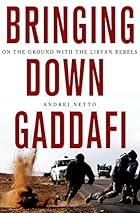
Here's my review of Andrei Netto's book from Librarything. I got the book as part of their early reader program and it was really worth it.

This book reads like a spy thriller, but it is amazingly real. A Brazilian journalist, the author, Andrei Netto, tells the story of his attempt to enter Libya to report on the Revolution and go to Tripoli with the help of revolutionaries he meets along the way. Eventually, he is captured with his companion, an Iraqi journalist. In time he is freed and continues to tell the story of the Revolution. 

Often during the book, I was silently urging Netto to turn back, but like all good journalists he persisted to the end. 

The book drew me in to the action, while at the same time giving a good overview of the overall situation. It would have been helpful to have a map of Libya to follow through the towns he visited. I found myself frequently going to Google Maps.

Given how Libya has become a matter of partisan politics in the USA, it was refreshing to see a different perspective. The book was originally written in Portuguese. The English translation is excellent and highly readable.

Monday, December 30, 2013

Independence Day

After I finished The Sportswriter I wanted to wait a while before coming back to the next book in the series, Independence Day. In the meantime I did read Canada on my Nook and I listened to it as an audiobook. Frank Bascombe is no more cheerful in this book. He is a realtor with real estate problems. He is also dealing a divorce and the problems of his fifteen year old son. I will add comments as I am reading the book.

Wednesday, June 19, 2013

Thoughts on The Godfather

I recently listened to an audiobook of The Godfather by Mario Puzo. Check it out on Librarything here. Of course I have seen the movie many times on TV. I first read the book back in the 1970's, when I was just starting high school.

The story holds up very well. The actions of the Corleone clan and the story of how Michael became the new Don is still gripping and well told. Still, the language is typical of the late 60's and doesn't accommodate today's sensitivities.

The Hollywood part of the story is mystifying. It could have easily been shortened or left out without hurting the story. What did Puzo include it?

I was fascinated by the Mafia philosophy. This came out in different parts of the story, when Michael was in Sicily and in the recounting of how his father turned to crime in his youth. The story showed how he learned that he couldn't rely on society to create a safe environment. Instead, he had to create his own world with its own rules. Intimidation and violence was okay if it was to protect his people and family. Loyalty was everything.

The justification for having guns reminded me of some of the more extreme justifications of gun advocates. They claim that we can't rely on society to protect us. They say we should be armed and ready for violence at all times.

The book ended differently from the movie. In the book, Michael's wife, Kay, converts to Catholicism and attends daily Mass to pray for the soul of her husband. I think this was a better ending, although it didn't allow for sequels.


Friday, April 19, 2013

John LeCarre

There is a fantastic interview of John LeCarre in the New York Times Magazine this weekend. It was very enlightening and has gotten me interested in rereading some of his books. I found some of his recent books too preachy, especially The Mission Song. However, the description made me want to find and read A Most Wanted Man.

I do have the omnibus of the Smiley novels and read Tinker, Tailor, Soldier, Spy and am almost at the end of The Honourable Schoolboy. I have held off with it since the end seems like Smiley was betrayed by his own people. Maybe it's time to go back?

Wikipedia has a list of all LeCarre's books. (link here)

Novels

[edit]Non-fiction

[edit]Short stories

  • Dare I Weep, Dare I Mourn? (1967) published in the Saturday Evening Post 28 January 1967.
  • What Ritual is Being Observed Tonight? (1968) published in the Saturday Evening Post 2 November 1968.
  • The Writer and The Horse (1968) published in The Savile Club Centenary Magazine and later The Argosy (& The Saturday Review under the title A Writer and A Gentleman.)
  • The King Who Never Spoke (2009) published in Ox-Tales: Fire 2 July 2009.

[edit]Omnibus

  • The Incongruous Spy (1964) (containing Call for the Dead and A Murder of Quality)
  • The Quest for Karla (1982) (containing Tinker, Tailor, Soldier, Spy, The Honourable Schoolboy and Smiley's People) (republished in 1995 as Smiley versus Karla in the UK; and John Le Carré: Three Complete Novels in the U.S.)

[edit]Screenplays

  • End of the Line (1970) broadcast 29 June 1970
  • A Murder of Quality (1991)
  • The Tailor of Panama (2001) with John Boorman and Andrew Davies

Thursday, April 18, 2013

All my texts

This semester I had the opportunity of having a work study student to help me with things. So, I asked her to work on a project I had wanted to do for a long time. She worked on entering all my forestry and related texts to my Librarything account. I'm not sure what I'll do with them, but I am really happy to have these books cataloged. Some of them have no covers. They are too old. Maybe that will be the next project. Here  is a link to the books: http://www.librarything.com/catalog/&tag=forestry-text


Canada


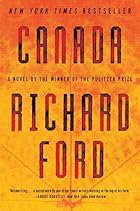
I read this in ebook format. It's amazing. It has some of the most emotionally painful scenes I have ever read. When the narrator, Dell, and his sister visit their arrested parents in the jail every detail brings out what a sad, experience this is. Yet, as a reader I didn't feel manipulated. This is how it would really feel. The author makes frequent use of repetition and foreshadowing. Again, it is done so naturally I never felt it was artificial. When the narrator says he never went to a place again or never saw someone again, you know something important is going to happen.
In a way the book relies a lot on coincidences to move the plot forward. Maybe the plot isn't the most important thing. The inner thoughts of Dell and how he reacts to the world are what count.

I also have this story in audiobook format. I intend to listen to it later on. 

Tuesday, July 10, 2012

Aurelio Zen -- Cabal


Michael Bibdin 1992. Cabal. Faber and Faber. London and Boston. 277p.

I have seen the Zen detective films on Masterpiece Mystery and really enjoyed them. The books are delightfully different. They give much more dimension to the character of Zen and the characters around him. For example, Tania, his girlfriend, is a budding business executive with an export business she runs on the side of her government job. The background of the story is the corruption and venality of Italians and the Italian state. Yet, it is a story told affectionately and humorously.

The TV version of Cabal implied that there really was a secret organization behind the murders. In the book it is strictly a comedy of errors and plotting. Also, the TV version took the story completely out of The Vatican. I guess it would have been too difficult to film there.

I can’t wait to read the other stories in the series.

Thoughts on The Sportswriter by Richard Ford


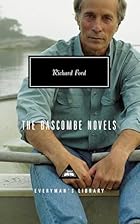
 I got this in the Everyman Edition, where it is bundled with Independence Day and The Lay of the Land as The Bascomb Novels. This summer Ford has released a new novel, Canada. I heard an interview with him on NPR. I thought before getting this book, I would check out his previous work as part of my new frugality.

The story is narrated and concerns the life of Frank Bascomb, a one-time novelist, who has become a sportswriter. He is undergoing an mid-life crisis following the death of his son, a few years ago. He divorced from his wife and is trying to find his footing. But everything is going wrong; poor choice girlfriend, too many affairs, and even a really bad choice of interview subject. He keeps saying that his problem is his dreaminess. He seems to want a life where he can stay at the surface of everything, without dealing with people and his problems. Of course, this doesn’t work. In very dense prose, he is constantly reviewing and reworking old experiences as he shows the reader where he screws up.

Perhaps the creepiest part is the divorced men’s club that he belongs to in his town in New Jersey. The club members go on fishing trips and sporting even outings, while they try to hide from their new reality. One of the members insists on confiding his problems to Frank.  ___ has recently had a one-night stand with a man he met in New York, although he doesn’t consider himself to be gay. He wants to tell Frank all and at one point tries to give Frank a kiss. In the climax of the novel he commits suicide, which forces Frank to deal with the situation; although he doesn’t really.

This is the book that gained Ford his fame. In the introduction he says that he wrote it at a time when he wasn’t sure he could succeed as a writer. He almost gave up, when he decided to try something totally new.

It’s definitely not a cheery book. For someone my age, it can be downright depressing. I like the author’s conversational tone. But it is a very dense book. I came across quite a few words whose meanings I had to guess at. He seemed to also have a lot of incomplete sentences. Yet they fit in so well that I only slightly noticed them.

Really, all the characters that Bascomb encounters are sad sacks or losers like him. There are no heroes. Perhaps only his two young children (Paul and Clary), come off as good, or at least not confused. Yet, they don’t take up much of the story. The most touching part for me was when ten-year-old Paul releases one of his pigeons to take a message to his deceased brother. Another weird aspect was how Bascomb addresses his ex-wife. She is named only as X. And she is bewildered by the actions of her former husband as any of the readers would be. She loves him, but can’t stay with him acting this way.

All in all I liked the story. Yet, I will wait a while before tackling the next one in the series!
Saturday, June 23, 2012

House of Stone


I just finished House of Stone, the final book the the reporter, Anthony Shadid. It recounts his efforts to rebuild the home of his great-grandfather in the small village of Marjayoun in southern Lebanon. Sadly, as the book came to press Shadid was killed while covering the uprising in Syria for the New York Times.

Interspersed in the story of the reconstruction, Shadid recounts the history of his family from the time his great grandfather built the home shortly after WWI through the emigration of his children to the USA down to the present day. It's an amazing story of courage and persistence through some really bad times. Amazingly, most of the family settled in Oklahoma, where they have prospered first as merchants, then as professionals.

I didn't realize how big a shock it was to the Middle East when the Ottoman Empire fell. All of the people from different religions had lived together peacefully for centuries. They were separated into different countries, many of which were controlled by European powers like France and Great Britain, who had their own agendas. The lawlessness and fighting that were unleashed are still with us today.

We hear in the news of reports of fighting in and between Israel, Syria, Lebanon, and the other countries. The old problems have never been resolved.

Shadid gives a vivid picture of life in the village today. The friends and workmen he describes struggle to maintain their lives in very difficult circumstances.

Through much of the book Shadid wrestles with his own life after a divorce. He is often guilty about being so far away from his daughter. In the epilogue we find out that he had remarried and had a baby son. In many ways I wish he hadn't gone on that last reporting mission to Syria. This is a book I can see myself rereading for its many dimensions.

Friday, June 17, 2011

Stranger in a Strange Land

I just finished rereading Robert Heinlein's masterpiece Stranger in a Strange Land. I haven't read it since high school. I hadn't even thought of it in years. I think the story has held up very well. There are some anachronisms that ring strange today. The curmudgeon, Jubal Harshaw, seems to treat his secretaries with 1950's condescension. But in the end we learn that he really loves and respects them.
Heinlein has a reputation as a libertarian. I expected more anti-government diatribes. There are some there. But compared to today's conservatives, he is respectful of government and politicians. After forcing the leader of the Federation to accept Michael, the man from Mars, he asks him to take control to manage Mike's immense fortune.
Of course, no one has really enacted the free love family relationship of the book. Yet, the message of tolerance and respect for people and the differences between people is so strong. This book has had a really important influence in my life, especially in the way I understand religion. It's an important aspect of human life and understanding, even though not factually correct and prone to exaggeration. We can only try to grok the universe and wait patiently. 
I was surprised to learn that there is a full-length original version that was published by Heinlein's widow. I want to get that now.

Wednesday, October 27, 2010

Christian America and the Kingdom of God

It's not often that we get authors visiting at Mont Alto. Yesterday I attended the presentation of Richard T. Hughes, the author of Christian America and the Kingdom of God and a large number of other books on religious topics. Hughes is a professor at Messiah College.

The subject of the talk was how the religious right has misrepresented the true meaning of the Gospel in their effort to make the USA turn back to God and proclaim itself a Christian nation. Hughes showed that although the nation was founded with a strong Judeo-Christian influence, the founding fathers never intended to establish a state religion. They knew too well the problems that had caused in Europe. Instead, they wanted a secular society where all religions would be respected.

Hughes touched on periods where fundamentalist leaders had tried to convince the country to accept their point of view. In the second Great Awakening in the first part of the nineteenth century their message included the plea for social justice that brought about many social reforms and led to the emancipation movement. In the fundamentalist movement in the early twentieth century they ignored social justice entirely. And in the fundamentalist movement that began after the 1960's they reject all claims of social justice that are found in the Bible.

According to Hughes, these lies are causing great harm to our country and leading to the political polarization that we have today. I thought his argument made a lot of sense. The fact that he is a strong Christian himself makes his argument even stronger. He is fighting from within, so to speak. I am eager to read the whole book. I was glad to get an autographed copy.

Thursday, September 09, 2010

The Passage

I just finished The Passage, by Justin Cronin. I heard of the book while listening to the author being interviewed on NPR's Talk of the Nation. I was on my way to Walmart, which fortunately had one last copy of the book.

I really enjoyed the story. I enjoyed that the monsters, the vampires, were not totally evil. They were as much to be pitied as feared. Although the story is classified as horror and science fiction, it has very strong, well developed characters. Peter is the perfect reluctant hero. As the miracle girl Amy has enough mystery, yet she is real enough to be believable.

Some reviewers felt the book was too long. But I really enjoyed the length. The author took the time to develop the characters and the situation. It took time to show the life on the colony and then how it came unraveled.

The end was really exciting, not what I expected at all. It really made me think. It will be worth it to read this again in a few months to catch some of the clues I may have missed the first time.

My only disappointment is that the next volume won't be published until 2012.

Wednesday, June 23, 2010

Mansfield Park

I recently finished Mansfield Park, in audiobook format. At first I thought this would be a Cinderella story, where Fanny overcome the adversity of being a near-orphan living with her wealthier relations. As the story continued it became more and more complicated.

I kept wanting Fanny to become more assertive. Instead I started to see her as a blank slate where her total virtue was used to show the shorctomings of her cousins, aunts, uncle, and all the other characters. It wasn't until the end of the book where she goes to visit her family that she showed some reactions of her own.

I didn't understand why Fanny and Edmund opposed the play so much. Was it just too show that it could lead to temptation? After a while I got tired of hearing about propriety so much. I read somewhere that Jane Austen had participated in amateur theatricals with her family. Did she oppose it or did she just use this situation to make the story?

Also it was obvious that Fanny would end up with Edmund. Didn't they worry then about first cousins marrying? And he never seemed to really understand her in spite of all his kindness.

I loved the characters in this book. Aunt Norris and Lady Bertram are fabulous. Henry and Mary Crawford are also great. I have known people like this and will think of these characters when I meet more. I can see coming back to this story again. I think next time I will read it, although I really liked the audiobook version.

Saturday, January 16, 2010

Gulag: A History


I just finished reading Gulag: A History by Anne Applebaum. This is a harrowing book, that I had to put down at times. The incredible cruelty of the Soviet state towards its own people was hard to imagine. Years ago, I read Solzhenitsyn's Gulag Archipelago and Day in the Life of Ivan Denisovich. I had forgotten just how terrible the Gulag was.

In the introduction Applebaum tries to explain why this story is almost forgotten in the West. She highlights how over the years many progressives were sympathetic to the Soviet Union, which has led them to soft pedal this story. That may be true, but I think more importantly this happened far away from America and most American didn't have a close connection to it.

I think it is too simplistic now to treat this tragedy as the usual liberal vs. conservative controversy. Isn't it more important to ask how a criminal gang could take over and enslave a whole country as big as Russia.

Monday, December 21, 2009

Snow Angels


Snow Angels is the first in a new mystery/crime series by James Thompson. The protagonist and narrator is Inspector Vaara, a police chief in the most northern part of Finland: Lapland. This is a dark book, in more ways than one. It takes place in the weeks before Christmas when there is no sunlight in this part of the world. Vaara is called to the scene of a gruesome murder in a snow-covered field, whose victim is a film actress and a Somali immigrant to Finland. To solve the case Vaara has to confront his own past, including failed relationships. At the same time he must comfort his new wife, an American, who is having a difficult time adjusting to the Finnish language and life.

I was tempted to drop the book about a third of the way in as the situations of all the characters seemed so bleak. However, I was soon drawn in to the story. I developed sympathy for many of the characters. The plot is very well crafted. I did not see the twists at the end. I am really looking forward to the next book in the series. I was impressed at how well the author, an American, seemed to understand the Finnish culture and character. And English readers benefit from reading the original, instead of a translation. Yet I would caution anyone who is squeamish that this is a very violent book.

Friday, November 27, 2009

Anna Karenina


I recently finished the Richard Pevear and Larissa Volokhonsky translation of Anna Karenina. I love the elegance of their translation. I get a real flavor of the upper class Russian society. At the same time I feel like I really know these characters as real people.

In the introduction Pevear says that Tolstoy wanted to write a book about domestic life, a book without a lot of action in the plot. He certainly succeeded. Aside from Anna's death there are few outwardly dramatic events. Yet, we really see into the emotional lives of the characters and can identify with them.

For example, I expected to dislike Karenin intensely. Instead I felt very sorry for him. If he weren't such an emotional cripple maybe he could have held on to Anna. When he begins to love Anna's illegitimate daughter I felt he was at his best. It makes him even more pitiable when he later falls under the influence of Princess Irina and loses all possibility of becoming a genuine person.

Levin was a fabulous character. He is so contradictory and torn. He is so hard on himself that he makes his life extremely difficult. It is easy to see how much of himself Tolstoy put into Levin. I liked how in the end Levin decides that he just has to live as much as he can. He decides to perserve through the contradictions of his lack of faith and need to pray when faced with a crisis. That's just how life is.

I will definitely reread this book again, maybe in a year or two.

Sidetracked


I've been reading the Wallander mysteries in order. This is the first one where he is not falling apart emotionally. Wallander is having difficulties with his father, who has just been diagnosed with dementia. His daughter is visiting and they are getting along better. It was nice to see hie able to work on the mystery without worrying that he will not make it through the story.

This would not be a good story to begin reading the series, however. Wallander is planning to visit his girl friend in Latvia. He doesn't know if he will be able to make their planned vacation. Unless you have read the previous books, it will be hard to know why she is so important to him.

The story gives an interesting inside view of Swedish life in the 1990's. It's not the Nordic paradise, we expect. There are many stresses in society. Although it is similar to the US or Britain, it is definitely a unique place.

This was a very enjoyable book!

Monday, July 13, 2009

Becoming Justice Blackmun

With the confirmation process for Judge Sonia Sotomyor getting underway I decided to read Becoming Justice Blackmun by Linda Greenhouse. Greenhouse is the former Suprement Court reporter for the New York Times. She was given early access to Justice Blackmun's papers in the Library of Congress.

This is an extremely interesting and readable book. It's not very long, either. Greenhouse is very gifted at explaining complex legal arguments in understandable terms. In parts, the book is a real page-turner.

I was impressed at how much Blackmun changed over time. He really grew as a person and in his understanding of the law. Since justices serve for have and have been serving even longer on the court, no president can expect that the justice he appoints today will stay the same over the years. When a problem gets to the Supreme Court it is often beyond the mechanism of the law, although that is vitally important. The justices have to get creative when there is no easy answer.

I was surprised that Blacmun's most famous opinion, Roe vs Wade, was not written primarily to protect women. It was designed to protect doctors as they worked with women to come up with the best treatment. It was only later that Blackmun became a champion of women's rights.

The demise of the friendship between Chief Justice Burger and Blackmun was one of the sadder parts of the book. Yet, it would have been almost impossible for them to retain their friendship given their different roles on the court and evolving points of view.

After reading this book, I will certainly never think of the Supreme Court the same way again.

Thursday, November 13, 2008

Newest Spy Book


I just finished The Spies of Warsaw. I read it in pretty much one sitting during a flight with multiple stops. In many ways it's like most of Furst's. The hero is struggling against vast odds in the buld-up to World War II. Colonel Mercier is the military attache in the French embassy in Warsaw. He dabbles with espionage on the side. And he has a sad past, being a widower. In his Warsaw job he controls some spies and does some espionage himself.
What interested me the most about the book is how, through the encouragement of a mentor in the the French intelligence service, he finds a way into the the German military high command. This involved dangerous trips to areas under Germna control and eventually even Berlin. Yet because the information he brings back isn't what the French army leaders want to hear, they find a way to disregard it. They are too committed to the Maginot Line. Is it true then, that often people do control their own destinies and fail by refusing to see the truth?
At least Mercier gets a promotion and finds a new wife. We learn at the end that the couple flees France for England when the Germans invade. Mercier works with DeGaulle to eventually liberate France.

Wednesday, August 06, 2008

The Story of Edgar Sawtelle

I just finished reading The Story of Edgar Sawtelle. I read most of it over two air flights. (Maybe I should have waited for the paperback for something lighter to carry.)

This is a fabulous story. I will be thinking about it for a long time. On the surface it's the story of a family that raises very perceptive, meticulously trained dogs in Wisconsin. The plot resembles Hamlet somewhat, including the appearance of at least two ghosts. Deep down it's about who people should relate to each other. How much do we owe each other? How does a person decide which course of actions to take when in doubt?

And it certainly challenges how I think about dogs, including my own dog!